


Table of Contents
- Why Your Skin Feels Dry After Cleansing: The Barrier Connection
- Signs of a Damaged Skin Barrier You Should Not Ignore
- Proper Facial Cleansing Methods That Protect Your Barrier
- Best Non-Harsh Facial Cleansers 2026: What to Look For
- Hard Water, Seasonal Shifts, and Other Hidden Causes of Post-Cleansing Dryness
- How to Restore Hydration After Washing
- Frequently Asked Questions
Last Updated: September 17, 2026
Why Your Skin Feels Dry After Cleansing: The Barrier Connection
If your skin feels dry after cleansing, the problem is usually not your skin type: it is what the wash stripped away. Cleansing removes oil, but a harsh formula also removes the lipids and natural moisturizing factors that keep water inside your skin. At Simone France, we have watched this pattern for more than 60 years, and the fix is almost always the same: change the method, not the moisturizer.
What the Acid Mantle Does for Your Skin
The acid mantle is the slightly acidic film on your skin's surface, made of sebum mixed with sweat and amino acids. It keeps pH balance steady and holds the skin microbiome in check. Soap and many foaming cleansers are alkaline, pushing your skin's pH upward with every wash; your barrier then spends hours returning to normal, and during that window your skin loses moisture faster and feels stripped.
How Transepidermal Water Loss Creates Tightness
Transepidermal water loss is the constant evaporation of water through your skin's surface. A healthy lipid barrier keeps that loss low. When surfactants dissolve the lipids between your skin cells, the barrier becomes leaky and water escapes quickly. That is the tightness you feel, and if it happens daily, it becomes dehydrated skin: dullness, flaking, and irritation no moisturizer fully fixes because you keep re-creating the problem every morning.
Signs of a Damaged Skin Barrier You Should Not Ignore
A damaged skin barrier announces itself in predictable ways: tightness within minutes of washing, stinging when you apply products that never used to sting, and a complexion that looks dull or feels rough no matter what you put on it. Flaking around the nose and cheeks, lingering redness, and skin that swings between oily and dry are also typical.
When Tightness Crosses Into Over-Cleansing
Over-cleansing is what happens when cleansing removes more than it should, and it is the single most common cause of post-wash dryness. Washing twice with a foaming formula, or more than twice a day because skin feels oily, makes sebaceous glands work harder and leaves skin sensitized. If your face feels tight for more than a few minutes after washing, you have crossed the line.
Proper Facial Cleansing Methods That Protect Your Barrier
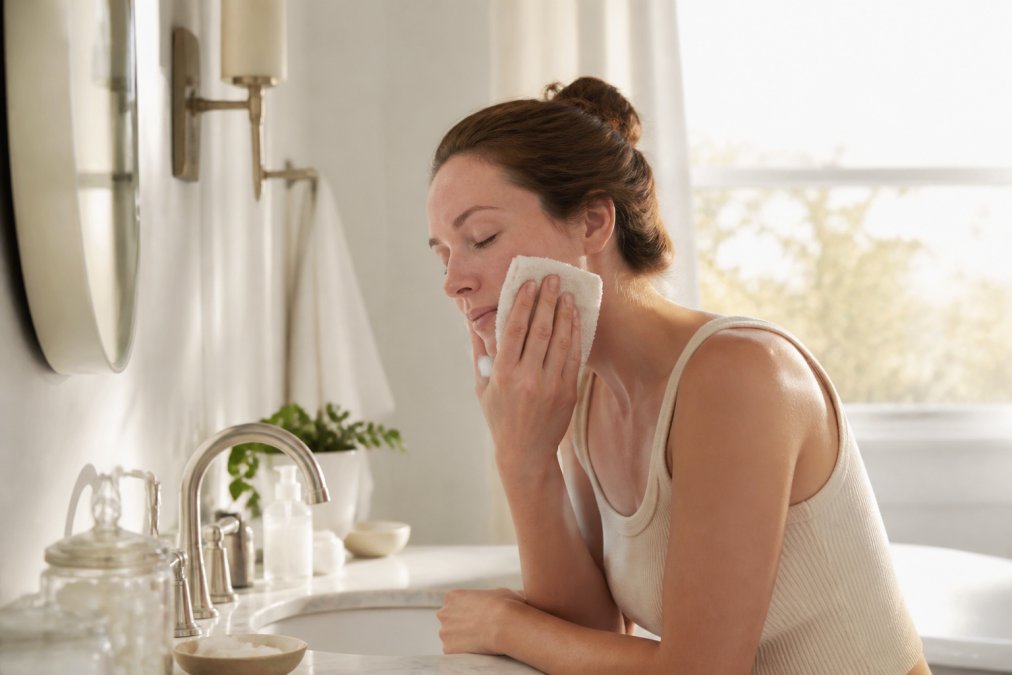
Proper facial cleansing methods protect the barrier by limiting friction, heat, and contact time. The goal is to dissolve makeup and oil without stripping the lipids underneath: lukewarm water, gentle pressure, and a soft cloth and vigorous splashing.
The Damp Skin Application Rule
The damp skin rule is simple: apply your next product while your skin is still damp, not fully dry. Pat your face with a cloth until it is barely wet, then press moisturizer or mask into the skin immediately. Damp skin absorbs humectants like glycerin and hyaluronic acid more readily, and sealing them in with emollients slows water loss.
Pressure, Friction, and Water Temperature
Water temperature matters more than most people expect. Hot water dissolves barrier lipids faster than lukewarm water, accelerating moisture loss during the wash itself, so keep it comfortable, not steamy. For pressure, use your fingertips or a soft cloth, never a rough scrub or brush daily, and avoid tugging the eye area. Friction damages the barrier mechanically, which is why scrubbing harder never produces cleaner skin, only irritated skin.
Best Non-Harsh Facial Cleansers 2026: What to Look For
The best non-harsh facial cleansers share three traits: a gentle surfactant system, a pH close to your skin's natural range, and ingredients that support the barrier instead of dissolving it. What leaves skin comfortable rather than tight is what does the cleaning, not how much lather you get.
Read the Surfactant, Not the Label
Surfactants lift oil and dirt so water can rinse them away. Their class matters more than the marketing word "gentle" on the tube.
- Anionic surfactants (sodium lauryl sulfate, sodium laureth sulfate) clean aggressively and foam heavily. They are the most likely to strip barrier lipids and leave that squeaky, tight feeling.
- Amphoteric and nonionic surfactants (cocamidopropyl betaine, coco-glucoside, decyl glucoside) clean effectively with far less lipid disruption. Most barrier-friendly cleansers are built on these.
- Amino acid surfactants (sodium cocoyl glycinate, sodium lauroyl glutamate) sit at the gentle end and are common in cream and milk cleansers.
The pH Number That Matters
Healthy skin sits around pH 4.5 to 5.5. Traditional bar soap runs roughly pH 9 to 10, and many foaming gels sit near pH 7 or above. Each alkaline wash pushes your acid mantle upward, and your barrier spends time working back down. A cleanser formulated near pH 5 to 5.5 supports the acid mantle instead of fighting it.
Ingredients Worth Seeking and Ingredients Worth Skipping
Look For |
Why It Helps |
Consider Avoiding |
Why It Hurts |
|---|---|---|---|
Ceramides (ceramide NP, AP, EOP) |
Replace barrier lipids lost during washing |
High-denatured alcohol near the top of the list |
Evaporates and pulls water from skin |
Glycerin, hyaluronic acid |
Humectants that hold water in the upper layers |
Sodium lauryl sulfate |
Aggressive lipid stripping |
Panthenol, allantoin |
Soothe and reduce reactivity |
Heavy synthetic fragrance |
Common irritant and sensitizer |
Cholesterol, fatty alcohols (cetyl, stearyl) |
Support the lipid matrix |
Physical exfoliant beads in a daily cleanser |
Mechanical barrier damage |
Non-foaming or low-foam texture |
Less surfactant contact with lipids |
"Squeaky clean" marketing claims |
Squeak signals stripped acid mantle |
Texture Tells You a Lot
Cream, milk, and balm cleansers generally use lower surfactant concentrations and leave more lipids behind. Gels and foams clean more aggressively and suit oily or acne-prone skin, but are most likely to cause post-wash tightness on dry or sensitive skin. If your skin feels dry after cleansing, moving from a gel to a cream or milk is often the single highest-impact change you can make.
A Note on Rinsing
Simone France takes the gentle-formula principle further by skipping liquid cleansers, gels, and serums entirely. Our Cleansing Milk Nighttime Cleanser is a velvet-textured milk that dissolves makeup and oil for all skin types, including sensitive skin, and our Signature methods, the Sandwich® and Touch & Glow, teach you to clean without stripping.

Hard Water, Seasonal Shifts, and Other Hidden Causes of Post-Cleansing Dryness
Most articles about post-cleansing dryness blame the product. In practice, the water from your tap and the season you wash in can matter just as much.
Hard Water: The Cause Most People Never Consider
Hard water carries dissolved calcium and magnesium. Those minerals react with the surfactants in your cleanser to form a soap scum that does not rinse cleanly. That film sits on your skin after you towel off, disrupting the acid mantle's pH balance and physically blocking the humectants in your moisturizer from reaching the skin. The result is the same tight, dry feeling a harsh cleanser would give you, even when you are using a gentle one.
Seasonal Transition Protocols
Skin's needs shift with the weather, and the routine that works in July often fails in January. Adjust ahead of the season rather than waiting for your skin to complain.
Moving into cold, dry months (late fall into winter):
- Switch from a gel or foaming cleanser to a cream or milk texture.
- Drop water temperature to comfortably lukewarm; hot showers strip lipids faster.
- Cut cleansing to once at night if mornings are not oily, and rinse with cool water only in the morning.
- Add a heavier moisturizer or a facial oil on top of your cream to slow water loss overnight.
- Run a humidifier in the bedroom; indoor heat can drop relative humidity well below the 30 to 50 percent range that skin tolerates comfortably.
Moving into warm, humid months (spring into summer):
- A slightly more thorough cleanse is fine, but keep contact time short.
- Rinse pool and ocean water off the face promptly; chlorine and salt both leave residue.
- Reapply moisturizer after any midday rinse, not just after your morning wash.
- If you sweat heavily, a quick lukewarm rinse followed by immediate moisturizer beats a second full cleanse.
During rapid swings (early spring, early fall):
- Keep two cleansers on hand, one cream and one gel, and switch based on how your skin feels that week rather than the calendar.
- Watch for the first sign of post-wash tightness and treat it as a signal to move toward the gentler option.
Other Hidden Causes Worth Ruling Out
- Medications and treatments. Prescription retinoids, acne treatments, and some blood pressure medications increase skin sensitivity and water loss. If dryness started with a new prescription, that timing is worth noting.
- Indoor air. Forced-air heating and air conditioning lower indoor humidity; a cheap hygrometer shows whether your home sits in the dry range.
- Swimming and hot tubs. Chlorine and bromine are oxidizing agents that disrupt the barrier. Rinse and moisturize within minutes of getting out.
- Frequent air travel. Cabin humidity is often under 20 percent, drier than most deserts. A travel-size moisturizer applied to damp skin after landing helps.
If you have addressed water quality, seasonal shifts, and technique and your skin still feels tight after every wash, see a dermatologist. Persistent post-cleansing dryness can overlap with conditions like eczema, rosacea, or seborrheic dermatitis that need a diagnosis rather than another product swap.
How to Restore Hydration After Washing
Restoring hydration after washing comes down to timing and layering. Within one minute of cleansing, while skin is slightly damp, smooth on a rich moisturizer on your face, neck, and décolleté. This is where our French Formula Moisturizer earns its place: a super-rich, buttery cream that firms, hydrates, and plumps dry to very dry skin and protects against the elements.

Frequently Asked Questions
Why does my skin get dry after I wash it?
Cleansing removes oil, dirt, and dead cells, but it can also strip the lipids and natural moisturizing factors that hold water in your skin. When the acid mantle and lipid barrier are compromised, transepidermal water loss speeds up and your face feels tight and dry within minutes. Harsh surfactants, hot water, and over-cleansing make this worse. Switching to a gentle formula and applying moisturizer to damp skin helps stop the cycle.
Is it normal for skin to feel tight after cleansing?
No. A slight freshness is fine, but real tightness means your skin has been stripped. Healthy skin should feel soft, calm, and comfortable after washing, not squeaky or taut. Persistent tightness is one of the earliest signs of a damaged skin barrier and often leads to flaking, redness, and sensitivity if you keep using the same routine. Adjust your cleanser and technique before the irritation compounds.
Can hard water make my skin feel dry after cleansing?
Yes. Hard water contains dissolved calcium and magnesium that react with cleanser surfactants, leaving a residue on your skin that disrupts pH balance and the lipid barrier. Many people notice more dryness, dullness, and irritation after washing when they move to a hard water area. A gentle non-harsh cleanser applied with a soft damp cloth, followed by immediate moisturizing, reduces the residue and helps protect the barrier.
What should I look for in the best non harsh facial cleansers in 2026?
Look for a gentle formula that removes makeup and impurities without stripping the acid mantle. Ingredients like glycerin, ceramides, and emollients support the lipid barrier, while fragrance-free options suit sensitized skin. Avoid cleansers that leave your face squeaky or tight. A velvet-textured cleansing milk used with a soft damp cloth removes residue thoroughly without the friction of rinsing alone, which is often where irritation starts.