


Table of Contents
- What Causes a Dry Skin Barrier to Break Down
- Signs of Damaged Skin Barrier You Shouldn't Ignore
- Step 1: Switch to Proper Cleansing Methods
- Step 2: Restore Hydration and Rebuild the Lipid Barrier
- Step 3: Support Barrier Recovery with Key Ingredients
- How Long to Heal Skin Barrier and What to Expect
- Your Complete Skin Barrier Repair Routine
- Common Mistakes That Delay Barrier Healing
- Frequently Asked Questions
Last Updated: September 14, 2026
What Causes a Dry Skin Barrier to Break Down
Your skin barrier is the outermost layer of your epidermis, made of lipids and proteins that protect against environmental damage and retain moisture. When it breaks down, water escapes from deeper layers while irritants penetrate inward, creating the tight, flaky feeling of compromised skin. Understanding what damages it is the first step to fix dry skin barrier problems at their source.

The most common culprits are aggressive cleansing habits. Harsh soaps, hot water, and over-exfoliation strip away the lipid layer that holds moisture. Many people damage their barrier while trying to "clean deeply", products designed to remove excess oil also remove the protective ceramides and fatty acids your skin needs. At Simone France, we offer a timeless, French-inspired approach to beauty, rooted in more than 60 years of expertise and a proven philosophy that prioritizes proper cleansing.
Environmental stress compounds the damage: cold, dry air pulls moisture from skin, while wind, pollution, and UV exposure accelerate degradation. Strong actives like retinoids, chemical exfoliants, and high-concentration vitamin C can overwhelm a compromised barrier, as can fragrance and alcohol-based products.
Signs of Damaged Skin Barrier You Shouldn't Ignore
A damaged barrier sends clear signals, but most people mistake them for other skin conditions and treat them incorrectly. Recognizing them early prevents escalation to severe sensitivity or chronic inflammation.
Persistent tightness and dryness that no moisturizer fixes is the hallmark sign. Your skin feels uncomfortable, or worse, after applying products, because the barrier cannot retain moisture and products sit on the surface. Flaking, rough texture, and visible dehydration follow, especially around the eyes and mouth where skin is thinner.
Increased sensitivity and reactivity indicate barrier compromise: skin stings when you apply products that never bothered you before, and redness, burning, or itching develops without an obvious cause. This happens because your barrier no longer filters irritants effectively, so they penetrate directly into sensitized skin layers.
Breakouts and congestion often accompany barrier damage. When the barrier is compromised, skin overproduces oil to compensate for moisture loss, creating conditions for bacterial growth and clogged pores, leaving you with dehydration and acne simultaneously.
Step 1: Switch to Proper Cleansing Methods
The foundation of any attempt to fix dry skin barrier damage is stopping the damage, which means rethinking how you cleanse. Gentle, non-stripping cleansing is the prerequisite for any barrier recovery.
Abandon hot water immediately, use lukewarm only, since heat accelerates transepidermal water loss (the American Academy of Dermatology). Limit cleansing to twice daily maximum; more frequent washing strips protective lipids even with gentle products.
Choose cleansers formulated for sensitive or compromised skin, products that remove makeup and impurities without surfactants that denature the stratum corneum. Simone France's Cleansing Milk Nighttime Cleanser dissolves makeup and oil without harsh sulfates, preserving the lipid barrier when your skin is already reactive.
The "Sandwich" method from Simone France is a signature deep cleansing method. This dual-layer approach removes what needs removing while protecting the barrier.
Step 2: Restore Hydration and Rebuild the Lipid Barrier
Once you've stopped the damage, active repair begins. Your barrier needs both water and lipids: humectants to draw moisture in and occlusives to seal it.
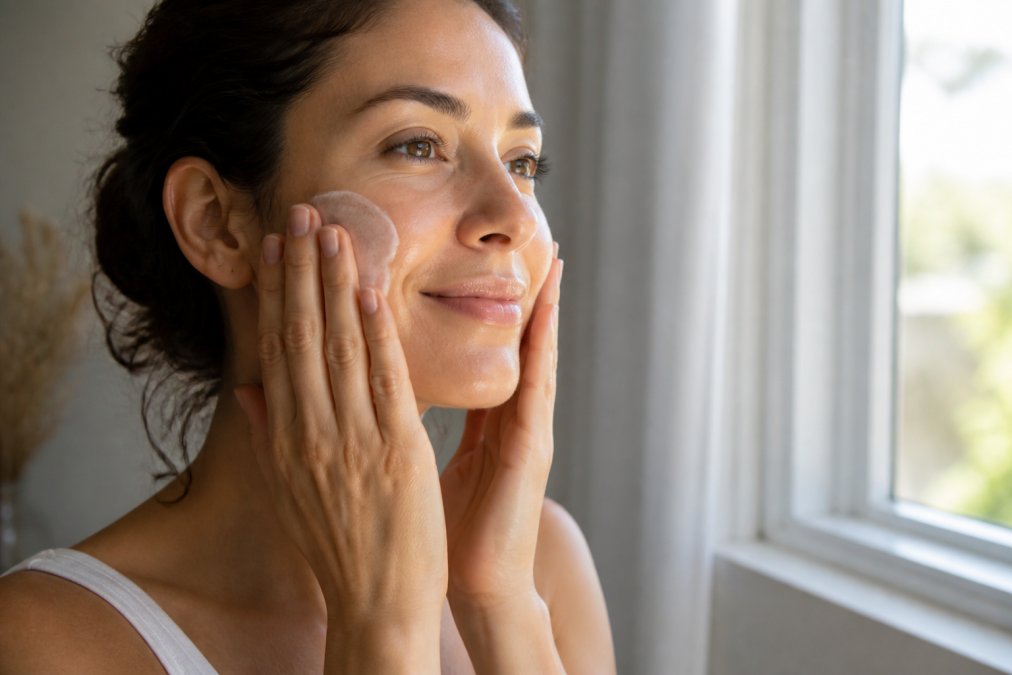
Layer hydrating products strategically. Apply water-based products to damp skin to maximize absorption. Hyaluronic acid and glycerin draw moisture into skin, but applied to completely dry skin they can paradoxically dehydrate further.
Follow hydration with occlusive moisturizers that seal everything in. These contain lipids, ceramides, fatty acids, and cholesterol that literally rebuild the barrier structure. French Formula Moisturizer for Dry to Very Dry Skin creates a protective seal.
For extremely dry or sensitive skin, add a treatment oil underneath your moisturizer. Line Minimizer Treatment Oil, made from 100% organic ingredients, provides concentrated lipid support. Layering hydration, then oil, then moisturizer addresses water retention and barrier structure simultaneously, always on damp skin.

Step 3: Support Barrier Recovery with Key Ingredients
While proper cleansing and hydration do most of the work, specific ingredients accelerate repair. Focus on proven barrier-supporting compounds rather than trendy actives.
Ceramides are non-negotiable, these lipids are literally part of your barrier structure (pubmed.ncbi.nlm.nih.gov). Niacinamide (vitamin B3) stimulates ceramide production and reduces inflammation, while centella asiatica (cica) soothes irritation and supports barrier function (pubmed.ncbi.nlm.nih.gov). These work with your skin's natural repair processes.
Avoid anything that disrupts repair during this phase. Retinoids, vitamin C serums, chemical exfoliants, and strong actives trigger inflammation and compromise the barrier further. You cannot "treat" barrier damage while continuing to use actives, a complete pause on all potentially irritating ingredients is temporary but non-negotiable.
Deep Moisture Dry Skin Treatment Mask provides concentrated barrier support through its Vitamin C-infused, collagen-boosting formula. Use it 2-3 times weekly as an intensive treatment, not daily.

How Long to Heal Skin Barrier and What to Expect
Barrier repair follows a predictable biological arc, but the timeline depends on how much damage accumulated and whether you keep triggering it. Knowing what happens beneath the surface at each stage prevents the frustration that makes people quit right before a routine starts working.
Days 1-3: The inflammation quiets down. Once you remove the irritant, harsh cleanser, hot water, an active, stinging and burning typically ease first. This is not repair, just your inflammatory response settling. Transepidermal water loss (TEWL) is still elevated, so expect continued tightness and flaking even though the burning stops.
Days 4-10: Surface improvement. Most people notice reduced flaking, less redness, and no stinging when moisturizer goes on. This is deceptive: the stratum corneum is rehydrating, but the lipid matrix underneath is still rebuilding. Do not reintroduce exfoliants or actives here, no matter how normal your skin feels.
Weeks 2-4: Lipid reconstruction. Ceramide, cholesterol, and free fatty acid production begins to normalize, and skin starts holding moisture on its own. You may still get reactive days after a hot shower or cold snap, two steps forward, one step back is normal, not a sign the routine is failing.
Weeks 4-8: Consolidation. Most people can apply a gentle product without stinging, and skin feels resilient rather than fragile. Full barrier recovery commonly takes 4-6 weeks for mild damage and up to 8-12 weeks for severe or long-standing compromise, if you've over-exfoliated for months, budget closer to the longer end.
How to self-assess whether you are actually healing. Track three markers:
- The sting test: Apply a plain, fragrance-free moisturizer. If it stings, the barrier is still compromised.
Your Complete Skin Barrier Repair Routine
Morning Routine
Evening Routine
What Not to Do
Budget vs. Luxury: What Actually Matters
Sample Routine Table
Step |
What to Look For |
Frequency |
Notes |
|---|---|---|---|
Cleanse |
Fragrance-free cream or milk cleanser |
1-2x daily |
Skip morning cleanse if very dry |
Hydrate |
Glycerin, hyaluronic acid, panthenol |
2x daily |
Apply to damp skin |
Moisturize |
Ceramides, cholesterol, fatty acids |
2x daily |
Seal in hydration |
Occlude |
Petrolatum, squalane, shea butter |
As needed |
For very dry skin, especially overnight |
Protect |
SPF 30+ mineral or gentle chemical |
Every morning |
Non-negotiable |
Intensive |
Fragrance-free hydrating mask |
2-3x weekly |
Optional supplement |
Internal and Environmental Support
Topicals only go so far. Pair the routine with:
Common Mistakes That Delay Barrier Healing
Frequently Asked Questions
How do I know if my skin barrier is damaged or just dry?
A damaged skin barrier shows persistent redness, sensitivity to products, a tight or uncomfortable feeling even after moisturizing, and often increased breakouts or inflammation. Simple dryness feels tight but improves quickly with hydration. A compromised barrier resists healing and reacts to almost everything you apply. The key difference: barrier damage causes sensitivity and reactivity, not just surface dehydration. If your skin feels raw or stings when you apply products, your barrier needs repair.
How long does it take to fix a dry skin barrier?
Most people see improvement within 2-4 weeks of consistent barrier repair, with the most dramatic changes in the first 14 days. Complete healing typically takes 4-8 weeks, depending on how damaged your barrier is. The stratum corneum (your skin's outer layer) naturally regenerates every 28 days, so you're working with your skin's natural cycle. Patience matters: rushing the process with harsh products or over-treating will restart the damage cycle and delay healing.
What ingredients actually repair a damaged skin barrier?
Ceramides, niacinamide, hyaluronic acid, and fatty acids are the foundation of barrier repair. Ceramides fill gaps in the lipid barrier; niacinamide reduces inflammation and supports barrier function; hyaluronic acid draws moisture into the skin; and fatty acids strengthen the protective layer. Look for products that combine these rather than single-ingredient solutions. Avoid actives like retinoids, chemical peels, and exfoliants entirely during healing—they damage an already compromised barrier further.
Can I use a damaged skin barrier repair routine with sensitive skin?
Yes, but simplicity is essential. A barrier repair routine for sensitive skin means eliminating everything except gentle cleansing, hydration, and protection. Start with a creamy cleanser like Cleansing Milk that removes impurities without stripping oils. Follow with a rich moisturizer like French Formula to seal in hydration and rebuild the lipid barrier. Avoid fragrance, essential oils, and unnecessary actives. Patch test any new product on your inner arm first, and introduce one product at a time over several days to monitor tolerance.