


Table of Contents
- Why Non-Harsh Facial Cleansers Matter for Your Skin Barrier
- How to Fix Tight Skin After Washing
- Signs of a Damaged Skin Barrier
- Benefits of Non-Liquid Facial Cleansers
- How to Choose the Right Cleanser for Your Skin Type
- Ingredients to Look For in Gentle Cleansers
- Ingredients to Avoid in Harsh Cleansers
- The Importance of pH-Balanced Cleansing
- Hard Water vs. Soft Water Cleansing
- Interaction With Other Skincare Actives
- Post-Cleansing Skin Barrier Repair
- Frequently Asked Questions
Last Updated: September 17, 2026
Why Non-Harsh Facial Cleansers Matter for Your Skin Barrier
The best non-harsh facial cleansers 2026 has to offer clean without tearing down the skin barrier, a lipid matrix of ceramides, cholesterol, and fatty acids. At Simone France, we've watched this for more than 60 years: how you clean your skin is usually the root of the problem. A damaged barrier shows up as redness, sudden sensitivity, or tightness minutes after washing.

How to Fix Tight Skin After Washing
Tight skin after washing is a barrier signal, not proof of a deep clean. Lower water temperature to lukewarm, switch to a pH-balanced, sulfate-free cleanser, skip foaming gels, wipe product off with a soft, damp cloth instead of splashing, and apply moisturizer within 60 seconds of patting dry. That's why Simone France includes Signature Cleansing Cloths with its cleansing kits.

Signs of a Damaged Skin Barrier
A damaged skin barrier shows up as redness, stinging, flaking, and skin that reacts to products it previously tolerated. A cluster lingering a week or more means your barrier needs a reset: strip your routine back to a gentle cleanser and basic moisturizer, then reintroduce actives one at a time.
Benefits of Non-Liquid Facial Cleansers
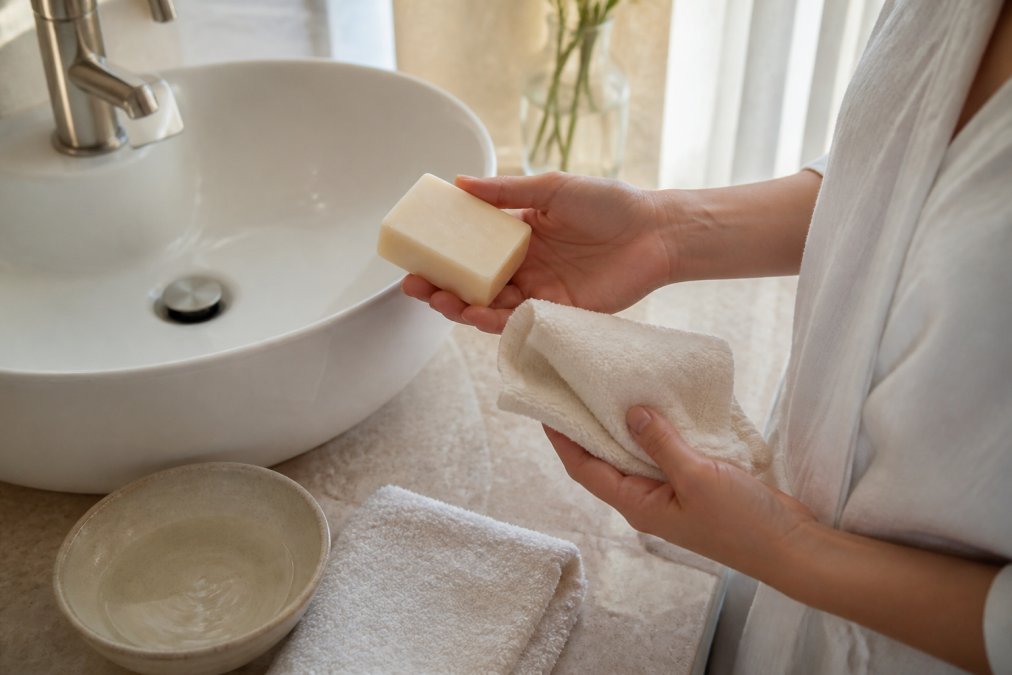
Non-liquid facial cleansers, including French-milled bar soap, cleansing milk, and gentle exfoliation clean more gently than gels because they rely on saponified oils and emollients rather than high-foam surfactants.
How to Choose the Right Cleanser for Your Skin Type
Match the cleanser to your skin type, not the loudest marketing claim: dry skin needs emollients and cream textures, oily skin needs sebum regulation without over-drying, and sensitive skin needs the shortest ingredient list you can find.
Ingredients to Look For in Gentle Cleansers
Gentle cleansers share a recognizable profile: humectants that hold water, emollients that soften, and mild surfactants that lift oil without stripping. Glycerin draws water into the outer layer and stays behind after rinsing. Hyaluronic acid holds many times its weight in water. Squalane is an emollient close in structure to your skin's own lipids, and ceramides replace what harsh cleansing removes.
Ingredients to Avoid in Harsh Cleansers
The ingredients to avoid strip first and apologize later: sodium lauryl sulfate (SLS) and sodium laureth sulfate (SLES) are high-foam surfactants that strip the lipid barrier quickly, denatured or SD alcohol is drying in high concentrations, physical exfoliants with jagged particles create micro-tears, synthetic fragrance triggers redness and stinging in reactive skin, and antibacterial agents like triclosan disrupt the skin microbiome.
The Importance of pH-Balanced Cleansing
pH-balanced cleansing keeps your skin's acid mantle intact. Skin sits naturally between pH 4.5 and 5.5, and cleansers outside that range disrupt the enzymes and lipids that protect it. Traditional bar soaps often land between pH 9 and 10, earning their harsh reputation, the tight, dry feeling after a high-pH bar isn't effective cleaning, it's a temporarily compromised barrier.
Cleansing Milk Nighttime Cleanser →
Hard Water vs. Soft Water Cleansing
Hard water leaves mineral residue that interferes with how cleansers rinse away. If your cleanser works while traveling but leaves film and tightness at home, water hardness is the likely culprit: dissolved calcium and magnesium react with soap to form a sticky residue that never fully rinses. In hard water areas, use a chelating shower filter, wipe cleanser off with a damp cloth, and choose a cleansing milk over a foaming formula.
Interaction With Other Skincare Actives
Cleansing determines how well every active you apply afterward performs. A compromised barrier absorbs actives unevenly, which is why retinoids and acids that worked for months can suddenly cause irritation. Cleanse with a gentle, non-stripping formula before a nighttime retinoid, and use a pH-balanced cleanser before morning vitamin C. Wait a full minute after cleansing before applying actives.
Post-Cleansing Skin Barrier Repair
Barrier repair starts the moment you finish cleansing, not hours later with a night cream. The first 60 seconds after washing are when skin loses the most moisture. Pat skin dry rather than rubbing, then apply moisturizer immediately, while skin is still slightly damp. Choose a moisturizer that matches your barrier's lipid structure: formulas with ceramides, squalane, and fatty acids replace what cleansing removed. Simone France approaches this differently.
Frequently Asked Questions
Is it good if my skin feels tight after cleansing?
No. That tight, squeaky feeling usually means your cleanser stripped away too much of your skin's natural oils and disrupted the lipid barrier. A good non-harsh facial cleanser should leave skin feeling soft, comfortable, and balanced, never dry or taut. If tightness shows up every time you wash, switch to a gentler method and follow with a moisturizer suited to your skin type to help the barrier recover.
What are the benefits of non-liquid cleansing methods?
Non-liquid cleansing methods, like French-milled soap bars and creamy milk cleansers, offer several advantages. They tend to use fewer surfactants, so they are less likely to strip your skin. They also allow for more controlled, tactile application and often include moisturizing ingredients like glycerin or squalane. Many people find these formats reduce redness, support the skin barrier, and leave skin feeling soft rather than tight after washing.
How can I tell if my current cleanser is too harsh?
Watch for redness, stinging, flaking, or a tight feeling right after washing. If your skin feels dry and uncomfortable within minutes, or if you notice increased sensitivity over time, your cleanser is likely too harsh. Other signs include breakouts along the jawline or cheeks that worsen after cleansing. Switching to a pH-balanced, fragrance-free option and using a soft cloth to remove residue can help reverse these effects.